Looger Lab
Since the advent of recombinant DNA cloning and x-ray crystallography, scientists have sought to determine the principles of molecular function, in order to understand how evolution has brought us to the present day. Others have supplemented nature's protein repertoire with variants improved for a particular function for which there is no selective pressure, e.g., visual display of neuronal activity for a human observer. In recent years, the thermodynamic driving forces of macromolecular structure have been fleshed out; indeed, the field is close to a general solution of the protein-folding problem for average-sized proteins.
In a complementary development, many new techniques have been discovered for the generation and screening of protein variant libraries, to select for beneficial mutations. Numerous protein properties have been improved relative to the naturally evolved sequences; indeed, functions unseen in the natural world have been discovered, either by rational or empirical methods, or increasingly by both. Our lab will use these tools to create reagents to elucidate the function of neural circuits. We will form many collaborations with other researchers to design and test these tools. Of the innumerable possible design goals, I highlight five that we will pursue.
Neurotransmitter Sensors
Neurotransmission via signaling molecules and electric potential is the primary means by which neural cells communicate. Reagents that can track these molecules and potentials with high spatiotemporal resolution will facilitate the dissection of complex neurophysiology into discrete signaling events. With Karel Svoboda (HHMI, Janelia Farm Research Campus), we will optimize existing neurotransmitter detectors to improve signal-to-noise ratio, environmental robustness, target specificity, resistance to in vivo malfunction, and temporal response, ideally to the resolution of individual signaling events. We will diversify the available sensor outputs to follow the development of novel imaging modalities and to select the optimal output for a given target. We will also expand the set of detectable ligands to include all neurotransmitters and relevant secondary messenger molecules.
Next-Generation Protein Fluorophoresand Imaging Labels
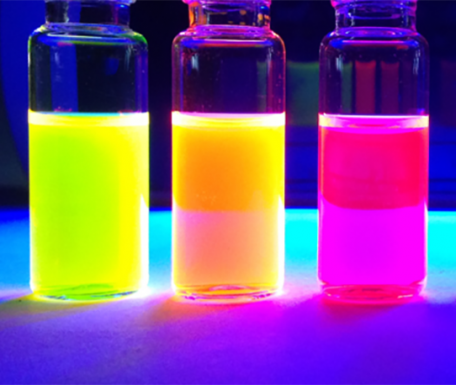
Recent advances in protein engineering and selection, in conjunction with a renewed search for naturally evolved fluorescent proteins, have yielded a new generation of imaging probes, filling the spectrum of possible colors, decreasing sensitivity to environmental parameters, improving folding kinetics and thermodynamics, allowing color changes, and diversifying the attachment-point geometry for protein fusions. We will combine rational design and in vitro and in vivo selection schemes to produce new proteins with defined properties, with an emphasis on those that advance pioneering imaging methods, such as the PALM and optical lattice microscopy developed by Eric Betzig (HHMI, JFRC).
Reengineered Receptor/Ligand Pairs
Binding events between proteins and small molecules dictate biology over short timescales. Organisms have evolved a precise set of neurotransmitters, receptors, and allosteric effectors to optimize communication. Conversely, a number of organisms have evolved toxins to specifically disrupt the signaling events of their competitors. Many neuroactive compounds have been discovered, for some of which structure-function relationships, mode of action, and protein target structures are known. In collaboration with Scott Sternson (HHMI, JFRC), we will design "bumps-and-holes" versions of these neuromodulatory compounds and the receptors to which they bind, thus making new receptor/ligand combinations that function independently. This will allow the activation of particular neural circuits in animals expressing the mutant receptors, without interference from endogenous molecules or other receptors.
Temperature-Sensitive Mutant Library for Flies and Worms
The use of temperature-sensitive gene alleles can facilitate the manipulation of individual genetic circuits while bypassing early lethality in organisms that can survive a thermal shock (fly and worm, and perhaps mouse). Animals are grown at a low, permissive temperature, at which all proteins are functional. Once the animal has grown to an appropriate developmental state, the temperature is increased to a high, selective temperature, at which one or more proteins fail due to their decreased thermodynamic stability. After sufficient time at the restrictive temperature, the function of this protein or proteins is neutralized (a genetic knockout would have failed in development). With Julie Simpson (HHMI, JFRC), we propose the large-scale production of designed temperature-sensitive versions of several critical components of neural signaling pathways, via molecular modeling, site-directed mutagenesis, and screening in vitro and in vivo. In conjunction with targeted expression, this will allow the construction of mutant organisms in which the function of subsets of neurons can be manipulated to define their contribution to behavior.
Structures of Membrane Proteins
Much of biology occurs at the lipid bilayer interface between a cell's "inside" and "outside." This is particularly true for the components of neural signaling circuits, almost all of which are located at or near the plasma membrane. Unfortunately, the complex biophysical properties of this environment are difficult to replicate in an ex vivo setting. This has dramatically hampered the utility of x-ray crystallography and nuclear magnetic resonance, the two principal means of protein structure determination, for membrane protein analysis. With several collaborators in the field, we propose to engineer membrane proteins that are more prone to crystallization than the wild-type versions. We will take as our model system the dopamine transporter, and engineer variants with stabilizing interactions, designed sites, decreased interdomain flexibility, and membrane-simulating derivatizations, in an attempt to discover mutants that form crystals of sufficient quality for structure determination. Knowledge of the structures of these membrane proteins will advance understanding of the molecular basis of neurotransmission. These proteins are also among the most important drug targets in biology.
These "neuroengineering" projects, combined with the pioneering work of other investigators, will help to establish the rules of neural circuit design, facilitating their targeted manipulation. The unifying theme of my research is the discovery of the organizing principles of molecular structure and function, and their extension to complex living systems. I believe that there is no more exciting field than neuroscience, the final frontier of physiology, in which to pursue this goal. We must be judged on the basis of our contributions to the understanding of the brain, but I hope that along the way we learn more about the tiny molecules and machines that compose this amazing organ.
For additional GENIE Project reagent information, please visit the GENIE Project Community Forum.
Plasmids available from Addgene.org:
CMV-GCaMP6s (improved SNR, slower kinetics)
CMV-GCaMP6m (improved SNR, intermediate kinetics)
CMV-GCaMP6f (improved SNR, faster kinetics)
CMV-GCaMP5G
CMV-GCaMP3
Viruses available from University of Pennsylvania Viral Vector Core:
AAV2/1.hSynap.GCaMP6s.WPRE.SV40
AAV2/1.hSynap.GCaMP6m.WPRE.SV40
AAV2/1.hSynap.GCaMP6f.WPRE.SV40
AAV2/1.CAG.GCaMP6s.WPRE.SV40
AAV2/1.CAG.GCaMP6m.WPRE.SV40
AAV2/1.CAG.GCaMP6f.WPRE.SV40
AAV2/1.hSynap.flex.GCaMP6s.WPRE.SV40
AAV2/1.hSynap.flex.GCaMP6m.WPRE.SV40
AAV2/1.hSynap.flex.GCaMP6f.WPRE.SV40
AAV2/1.CAG.flex.GCaMP6s.WPRE.SV40
AAV2/1.CAG.flex.GCaMP6m.WPRE.SV40
AAV2/1.CAG.flex.GCaMP6f.WPRE.SV40
---
AAV2/1.hSynap.GCaMP5G.WPRE.SV40
AAV2/1.hSynap.Flex.GCaMP5G.WPRE.SV40
AAV2/1.CAG.Flex.GCaMP5G.WPRE.SV40
AAV2/5.hSynap.GCaMP5G.WPRE.SV40
AAV2/9.hSynap.GCaMP5G.WPRE.SV40
AAV2/9.hSynap.Flex.GCaMP5G.WPRE.SV40
---
AAV2/1.hSynap.GCaMP3.3.SV40
AAV2/5.hSynap.GCaMP3.3.SV40
AAV2/9.hSynap.GCaMP3.3.SV40
AAV2/1.hSynap.Flex.GCaMP3.3.SV40
AAV2/5.hSynap.Flex.GCaMP3.3.SV40
AAV2/9.hSynap.Flex.GCaMP3.3.SV40
Mice available from The Jackson Laboratory:
Rosa26-CAG-lox-stop-lox-GCaMP3-WPRE
Thy1-GCaMP3
Flies available from Bloomington Stock Center:
P{20XUAS-IVS-GCaMP6s}attP40
P{20XUAS-IVS-GCaMP6m}attP40
P{20XUAS-IVS-GCaMP6f}attP40
PBac{20XUAS-IVS-GCaMP6s}VK00005
PBac{20XUAS-IVS-GCaMP6m}VK00005
---
P{20XUAS-IVS-GCaMP5G}attP40
PBac{20XUAS-IVS-GCaMP5G}VK00005
---
P{UAS-GCaMP3.T}attP40
P{20XUAS-GCaMP3}su(Hw)attP8
P{20XUAS-GCaMP3}attP18
P{20XUAS-GCaMP3}attP2
PBac{20XUAS-GCaMP3}VK00005
C. elegans distributed upon request:
mec-4::nls-RSET-GCaMP6s:SL2:nls-TagRFP::unc-54utr
-
-
Loren Looger Lab Head
-
Jasper Akerboom Research Staff
-
Jacob Keller Postdoctoral Associate
-
Ahmed Mahmoud
-
Jonathan Marvin Senior Scientist
-
Gaby Paez Research Staff
-
Sarada Viswanathan Research Staff
-
Margaret Jefferies
Janelia Publications
The ability to chronically monitor neuronal activity in the living brain is essential for understanding the organization and function of the nervous system. The genetically encoded green fluorescent protein based calcium sensor GCaMP provides a powerful tool for detecting calcium transients in neuronal somata, processes, and synapses that are triggered by neuronal activities. Here we report the generation and characterization of transgenic mice that express improved GCaMPs in various neuronal subpopulations under the control of the Thy1 promoter. In vitro and in vivo studies show that calcium transients induced by spontaneous and stimulus-evoked neuronal activities can be readily detected at the level of individual cells and synapses in acute brain slices, as well as in awake behaving animals. These GCaMP transgenic mice allow investigation of activity patterns in defined neuronal populations in the living brain, and will greatly facilitate dissecting complex structural and functional relationships of neural networks.
Genetically encoded calcium indicators (GECIs), together with modern microscopy, allow repeated activity measurement, in real time and with cellular resolution, of defined cellular populations. Recent efforts in protein engineering have yielded several high-quality GECIs that facilitate new applications in neuroscience. Here, we summarize recent progress in GECI design, optimization, and characterization, and provide guidelines for selecting the appropriate GECI for a given biological application. We focus on the unique challenges associated with imaging in behaving animals.
Endocytic recycling of synaptic vesicles after exocytosis is critical for nervous system function. At synapses of cultured neurons that lack the two "neuronal" dynamins, dynamin 1 and 3, smaller excitatory postsynaptic currents are observed due to an impairment of the fission reaction of endocytosis that results in an accumulation of arrested clathrin-coated pits and a greatly reduced synaptic vesicle number. Surprisingly, despite a smaller readily releasable vesicle pool and fewer docked vesicles, a strong facilitation, which correlated with lower vesicle release probability, was observed upon action potential stimulation at such synapses. Furthermore, although network activity in mutant cultures was lower, Ca(2+)/calmodulin-dependent protein kinase II (CaMKII) activity was unexpectedly increased, consistent with the previous report of an enhanced state of synapsin 1 phosphorylation at CaMKII-dependent sites in such neurons. These changes were partially reversed by overnight silencing of synaptic activity with tetrodotoxin, a treatment that allows progression of arrested endocytic pits to synaptic vesicles. Facilitation was also counteracted by CaMKII inhibition. These findings reveal a mechanism aimed at preventing synaptic transmission failure due to vesicle depletion when recycling vesicle traffic is backed up by a defect in dynamin-dependent endocytosis and provide new insight into the coupling between endocytosis and exocytosis.
The mechanisms linking sensation and action during learning are poorly understood. Layer 2/3 neurons in the motor cortex might participate in sensorimotor integration and learning; they receive input from sensory cortex and excite deep layer neurons, which control movement. Here we imaged activity in the same set of layer 2/3 neurons in the motor cortex over weeks, while mice learned to detect objects with their whiskers and report detection with licking. Spatially intermingled neurons represented sensory (touch) and motor behaviours (whisker movements and licking). With learning, the population-level representation of task-related licking strengthened. In trained mice, population-level representations were redundant and stable, despite dynamism of single-neuron representations. The activity of a subpopulation of neurons was consistent with touch driving licking behaviour. Our results suggest that ensembles of motor cortex neurons couple sensory input to multiple, related motor programs during learning.
Genetically encoded calcium indicators (GECIs) are powerful tools for systems neuroscience. Recent efforts in protein engineering have significantly increased the performance of GECIs. The state-of-the art single-wavelength GECI, GCaMP3, has been deployed in a number of model organisms and can reliably detect three or more action potentials in short bursts in several systems in vivo . Through protein structure determination, targeted mutagenesis, high-throughput screening, and a battery of in vitro assays, we have increased the dynamic range of GCaMP3 by severalfold, creating a family of “GCaMP5” sensors. We tested GCaMP5s in several systems: cultured neurons and astrocytes, mouse retina, and in vivo in Caenorhabditis chemosensory neurons, Drosophila larval neuromuscular junction and adult antennal lobe, zebrafish retina and tectum, and mouse visual cortex. Signal-to-noise ratio was improved by at least 2- to 3-fold. In the visual cortex, two GCaMP5 variants detected twice as many visual stimulus-responsive cells as GCaMP3. By combining in vivo imaging with electrophysiology we show that GCaMP5 fluorescence provides a more reliable measure of neuronal activity than its predecessor GCaMP3.GCaMP5allows more sensitive detection of neural activity in vivo andmayfind widespread applications for cellular imaging in general.
Cortical-feedback projections to primary sensory areas terminate most heavily in layer 1 (L1) of the neocortex, where they make synapses with tuft dendrites of pyramidal neurons. L1 input is thought to provide ‘contextual’ information, but the signals transmitted by L1 feedback remain uncharacterized. In the rodent somatosensory system, the spatially diffuse feedback projection from vibrissal motor cortex (vM1) to vibrissal somatosensory cortex (vS1, also known as the barrel cortex) may allow whisker touch to be interpreted in the context of whisker position to compute object location. When mice palpate objects with their whiskers to localize object features, whisker touch excites vS1 and later vM1 in a somatotopic manner. Here we use axonal calcium imaging to track activity in vM1-->vS1 afferents in L1 of the barrel cortex while mice performed whisker-dependent object localization. Spatially intermingled individual axons represent whisker movements, touch and other behavioural features. In a subpopulation of axons, activity depends on object location and persists for seconds after touch. Neurons in the barrel cortex thus have information to integrate movements and touches of multiple whiskers over time, key components of object identification and navigation by active touch.
Small molecules are important tools to measure and modulate intracellular signaling pathways. A longstanding limitation for using chemical compounds in complex tissues has been the inability to target bioactive small molecules to a specific cell class. Here, we describe a generalizable esterase-ester pair capable of targeted delivery of small molecules to living cells and tissue with cellular specificity. We used fluorogenic molecules to rapidly identify a small ester masking motif that is stable to endogenous esterases, but is efficiently removed by an exogenous esterase. This strategy allows facile targeting of dyes and drugs in complex biological environments to label specific cell types, illuminate gap junction connectivity, and pharmacologically perturb distinct subsets of cells. We expect this approach to have general utility for the specific delivery of many small molecules to defined cellular populations.
Two-photon probe excitation data are commonly presented as absorption cross section or molecular brightness (the detected fluorescence rate per molecule). We report two-photon molecular brightness spectra for a diverse set of organic and genetically encoded probes with an automated spectroscopic system based on fluorescence correlation spectroscopy. The two-photon action cross section can be extracted from molecular brightness measurements at low excitation intensities, while peak molecular brightness (the maximum molecular brightness with increasing excitation intensity) is measured at higher intensities at which probe photophysical effects become significant. The spectral shape of these two parameters was similar across all dye families tested. Peak molecular brightness spectra, which can be obtained rapidly and with reduced experimental complexity, can thus serve as a first-order approximation to cross-section spectra in determining optimal wavelengths for two-photon excitation, while providing additional information pertaining to probe photostability. The data shown should assist in probe choice and experimental design for multiphoton microscopy studies. Further, we show that, by the addition of a passive pulse splitter, nonlinear bleaching can be reduced-resulting in an enhancement of the fluorescence signal in fluorescence correlation spectroscopy by a factor of two. This increase in fluorescence signal, together with the observed resemblance of action cross section and peak brightness spectra, suggests higher-order photobleaching pathways for two-photon excitation.
Fluorescent calcium indicator proteins, such as GCaMP3, allow imaging of activity in genetically defined neuronal populations. GCaMP3 can be expressed using various gene delivery methods, such as viral infection or electroporation. However, these methods are invasive and provide inhomogeneous and nonstationary expression. Here, we developed a genetic reporter mouse, Ai38, which expresses GCaMP3 in a Cre-dependent manner from the ROSA26 locus, driven by a strong CAG promoter. Crossing Ai38 with appropriate Cre mice produced robust GCaMP3 expression in defined cell populations in the retina, cortex, and cerebellum. In the primary visual cortex, visually evoked GCaMP3 signals showed normal orientation and direction selectivity. GCaMP3 signals were rapid, compared with virally expressed GCaMP3 and synthetic calcium indicators. In the retina, Ai38 allowed imaging spontaneous calcium waves in starburst amacrine cells during development, and light-evoked responses in ganglion cells in adult tissue. Our results show that the Ai38 reporter mouse provides a flexible method for targeted expression of GCaMP3.
Multiphoton imaging (MPI) is widely used for recording activity simultaneously from many neurons in superficial cortical layers in vivo. We combined regenerative amplification multiphoton microscopy (RAMM) with genetically encoded calcium indicators to extend MPI of neuronal population activity into layer 5 (L5) of adult mouse somatosensory cortex. We found that this approach could be used to record and quantify spontaneous and sensory-evoked activity in populations of L5 neuronal somata located as much as 800 μm below the pia. In addition, we found that RAMM could be used to simultaneously image activity from large (80) populations of apical dendrites and follow these dendrites down to their somata of origin.
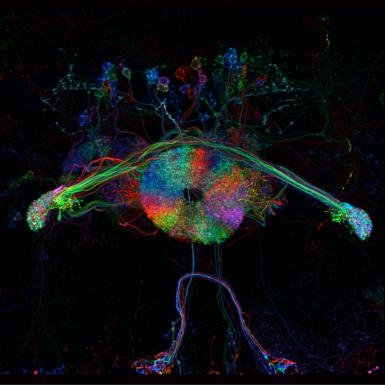
We developed a multicolor neuron labeling technique in Drosophila melanogaster that combines the power to specifically target different neural populations with the label diversity provided by stochastic color choice. This adaptation of vertebrate Brainbow uses recombination to select one of three epitope-tagged proteins detectable by immunofluorescence. Two copies of this construct yield six bright, separable colors. We used Drosophila Brainbow to study the innervation patterns of multiple antennal lobe projection neuron lineages in the same preparation and to observe the relative trajectories of individual aminergic neurons. Nerve bundles, and even individual neurites hundreds of micrometers long, can be followed with definitive color labeling. We traced motor neurons in the subesophageal ganglion and correlated them to neuromuscular junctions to identify their specific proboscis muscle targets. The ability to independently visualize multiple lineage or neuron projections in the same preparation greatly advances the goal of mapping how neurons connect into circuits.
The phnD gene of Escherichia coli encodes the periplasmic binding protein of the phosphonate (Pn) uptake and utilization pathway. We have crystallized and determined structures of E. coli PhnD (EcPhnD) in the absence of ligand and in complex with the environmentally abundant 2-aminoethylphosphonate (2AEP). Similar to other bacterial periplasmic binding proteins, 2AEP binds near the center of mass of EcPhnD in a cleft formed between two lobes. Comparison of the open, unliganded structure with the closed 2AEP-bound structure shows that the two lobes pivot around a hinge by ∼70° between the two states. Extensive hydrogen bonding and electrostatic interactions stabilize 2AEP, which binds to EcPhnD with low nanomolar affinity. These structures provide insight into Pn uptake by bacteria and facilitated the rational design of high signal-to-noise Pn biosensors based on both coupled small-molecule dyes and autocatalytic fluorescent proteins.
We describe the generation of a family of high-signal-to-noise single-wavelength genetically encoded indicators for maltose. This was achieved by insertion of circularly permuted fluorescent proteins into a bacterial periplasmic binding protein (PBP), Escherichia coli maltodextrin-binding protein, resulting in a four-color family of maltose indicators. The sensors were iteratively optimized to have sufficient brightness and maltose-dependent fluorescence increases for imaging, under both one- and two-photon illumination. We demonstrate that maltose affinity of the sensors can be tuned in a fashion largely independent of the fluorescent readout mechanism. Using literature mutations, the binding specificity could be altered to moderate sucrose preference, but with a significant loss of affinity. We use the soluble sensors in individual E. coli bacteria to observe rapid maltose transport across the plasma membrane, and membrane fusion versions of the sensors on mammalian cells to visualize the addition of maltose to extracellular media. The PBP superfamily includes scaffolds specific for a number of analytes whose visualization would be critical to the reverse engineering of complex systems such as neural networks, biosynthetic pathways, and signal transduction cascades. We expect the methodology outlined here to be useful in the development of indicators for many such analytes.
Ionic flux mediates essential physiological and behavioral functions in defined cell populations. Cell type-specific activators of diverse ionic conductances are needed for probing these effects. We combined chemistry and protein engineering to enable the systematic creation of a toolbox of ligand-gated ion channels (LGICs) with orthogonal pharmacologic selectivity and divergent functional properties. The LGICs and their small-molecule effectors were able to activate a range of ionic conductances in genetically specified cell types. LGICs constructed for neuronal perturbation could be used to selectively manipulate neuron activity in mammalian brains in vivo. The diversity of ion channel tools accessible from this approach will be useful for examining the relationship between neuronal activity and animal behavior, as well as for cell biological and physiological applications requiring chemical control of ion conductance.
Decoding the wiring diagram of the retina requires simultaneous observation of activity in identified neuron populations. Available recording methods are limited in their scope: electrodes can access only a small fraction of neurons at once, whereas synthetic fluorescent indicator dyes label tissue indiscriminately. Here, we describe a method for studying retinal circuitry at cellular and subcellular levels combining two-photon microscopy and a genetically encoded calcium indicator. Using specific viral and promoter constructs to drive expression of GCaMP3, we labeled all five major neuron classes in the adult mouse retina. Stimulus-evoked GCaMP3 responses as imaged by two-photon microscopy permitted functional cell type annotation. Fluorescence responses were similar to those measured with the small molecule dye OGB-1. Fluorescence intensity correlated linearly with spike rates >10 spikes/s, and a significant change in fluorescence always reflected a significant change in spike firing rate. GCaMP3 expression had no apparent effect on neuronal function. Imaging at subcellular resolution showed compartment-specific calcium dynamics in multiple identified cell types.
Recording activity from identified populations of neurons is a central goal of neuroscience. Changes in membrane depolarization, particularly action potentials, are the most important features of neural physiology to extract, although ions, neurotransmitters, neuromodulators, second messengers, and the activation state of specific proteins are also crucial. Modern fluorescence microscopy provides the basis for such activity mapping, through multi-photon imaging and other optical schemes. Probes remain the rate-limiting step for progress in this field: they should be bright and photostable, and ideally come in multiple colors. Only protein-based reagents permit chronic imaging from genetically specified cells. Here we review recent progress in the design, optimization and deployment of genetically encoded indicators for calcium ions (a proxy for action potentials), membrane potential, and neurotransmitters. We highlight seminal experiments, and present an outlook for future progress.
The optic tectum of zebrafish is involved in behavioral responses that require the detection of small objects. The superficial layers of the tectal neuropil receive input from retinal axons, while its deeper layers convey the processed information to premotor areas. Imaging with a genetically encoded calcium indicator revealed that the deep layers, as well as the dendrites of single tectal neurons, are preferentially activated by small visual stimuli. This spatial filtering relies on GABAergic interneurons (using the neurotransmitter γ-aminobutyric acid) that are located in the superficial input layer and respond only to large visual stimuli. Photo-ablation of these cells with KillerRed, or silencing of their synaptic transmission, eliminates the size tuning of deeper layers and impairs the capture of prey.
Photoreceptors for visual perception, phototaxis or light avoidance are typically clustered in eyes or related structures such as the Bolwig organ of Drosophila larvae. Unexpectedly, we found that the class IV dendritic arborization neurons of Drosophila melanogaster larvae respond to ultraviolet, violet and blue light, and are major mediators of light avoidance, particularly at high intensities. These class IV dendritic arborization neurons, which are present in every body segment, have dendrites tiling the larval body wall nearly completely without redundancy. Dendritic illumination activates class IV dendritic arborization neurons. These novel photoreceptors use phototransduction machinery distinct from other photoreceptors in Drosophila and enable larvae to sense light exposure over their entire bodies and move out of danger.
Drosophila show innate olfactory-driven behaviours that are observed in naive animals without previous learning or experience, suggesting that the neural circuits that mediate these behaviours are genetically programmed. Despite the numerical simplicity of the fly nervous system, features of the anatomical organization of the fly brain often confound the delineation of these circuits. Here we identify a neural circuit responsive to cVA, a pheromone that elicits sexually dimorphic behaviours. We have combined neural tracing using an improved photoactivatable green fluorescent protein (PA-GFP) with electrophysiology, optical imaging and laser-mediated microlesioning to map this circuit from the activation of sensory neurons in the antennae to the excitation of descending neurons in the ventral nerve cord. This circuit is concise and minimally comprises four neurons, connected by three synapses. Three of these neurons are overtly dimorphic and identify a male-specific neuropil that integrates inputs from multiple sensory systems and sends outputs to the ventral nerve cord. This neural pathway suggests a means by which a single pheromone can elicit different behaviours in the two sexes.
The generation of coordinated body movements relies on sensory feedback from mechanosensitive proprioceptors. We have found that the proper function of NompC, a putative mechanosensitive TRP channel, is not only required for fly locomotion, but also crucial for larval crawling. Calcium imaging revealed that NompC is required for the activation of two subtypes of sensory neurons during peristaltic muscle contractions. Having isolated a full-length nompC cDNA with a protein coding sequence larger than previously predicted, we demonstrate its function by rescuing locomotion defects in nompC mutants, and further show that antibodies against the extended C terminus recognize NompC in chordotonal ciliary tips. Moreover, we show that the ankyrin repeats in NompC are required for proper localization and function of NompC in vivo and are required for association of NompC with microtubules. Taken together, our findings suggest that NompC mediates proprioception in locomotion and support its role as a mechanosensitive channel.
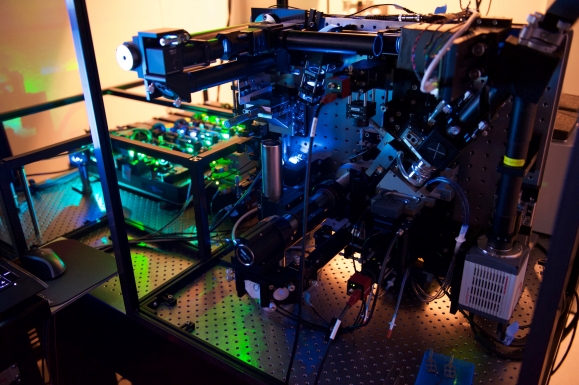
Imaging approaches based on single molecule localization break the diffraction barrier of conventional fluorescence microscopy, allowing for bioimaging with nanometer resolution. It remains a challenge, however, to precisely localize photon-limited single molecules in 3D. We have developed a new localization-based imaging technique achieving almost isotropic subdiffraction resolution in 3D. A tilted mirror is used to generate a side view in addition to the front view of activated single emitters, allowing their 3D localization to be precisely determined for superresolution imaging. Because both front and side views are in focus, this method is able to efficiently collect emitted photons. The technique is simple to implement on a commercial fluorescence microscope, and especially suitable for biological samples with photon-limited chromophores such as endogenously expressed photoactivatable fluorescent proteins. Moreover, this method is relatively resistant to optical aberration, as it requires only centroid determination for localization analysis. Here we demonstrate the application of this method to 3D imaging of bacterial protein distribution and neuron dendritic morphology with subdiffraction resolution.
Spatial navigation is often used as a behavioral task in studies of the neuronal circuits that underlie cognition, learning and memory in rodents. The combination of in vivo microscopy with genetically encoded indicators has provided an important new tool for studying neuronal circuits, but has been technically difficult to apply during navigation. Here we describe methods for imaging the activity of neurons in the CA1 region of the hippocampus with subcellular resolution in behaving mice. Neurons that expressed the genetically encoded calcium indicator GCaMP3 were imaged through a chronic hippocampal window. Head-restrained mice performed spatial behaviors in a setup combining a virtual reality system and a custom-built two-photon microscope. We optically identified populations of place cells and determined the correlation between the location of their place fields in the virtual environment and their anatomical location in the local circuit. The combination of virtual reality and high-resolution functional imaging should allow a new generation of studies to investigate neuronal circuit dynamics during behavior.
The genetically encoded calcium indicator GCaMP2 shows promise for neural network activity imaging, but is currently limited by low signal-to-noise ratio. We describe x-ray crystal structures as well as solution biophysical and spectroscopic characterization of GCaMP2 in the calcium-free dark state, and in two calcium-bound bright states: a monomeric form that dominates at intracellular concentrations observed during imaging experiments and an unexpected domain-swapped dimer with decreased fluorescence. This series of structures provides insight into the mechanism of Ca2+-induced fluorescence change. Upon calcium binding, the calmodulin (CaM) domain wraps around the M13 peptide, creating a new domain interface between CaM and the circularly permuted enhanced green fluorescent protein domain. Residues from CaM alter the chemical environment of the circularly permuted enhanced green fluorescent protein chromophore and, together with flexible inter-domain linkers, block solvent access to the chromophore. Guided by the crystal structures, we engineered a series of GCaMP2 point mutants to probe the mechanism of GCaMP2 function and characterized one mutant with significantly improved signal-to-noise. The mutation is located at a domain interface and its effect on sensor function could not have been predicted in the absence of structural data.
Genetically encoded calcium indicators (GECIs) can be used to image activity in defined neuronal populations. However, current GECIs produce inferior signals compared to synthetic indicators and recording electrodes, precluding detection of low firing rates. We developed a single-wavelength GCaMP2-based GECI (GCaMP3), with increased baseline fluorescence (3-fold), increased dynamic range (3-fold) and higher affinity for calcium (1.3-fold). We detected GCaMP3 fluorescence changes triggered by single action potentials in pyramidal cell dendrites, with signal-to-noise ratio and photostability substantially better than those of GCaMP2, D3cpVenus and TN-XXL. In Caenorhabditis elegans chemosensory neurons and the Drosophila melanogaster antennal lobe, sensory stimulation-evoked fluorescence responses were significantly enhanced with GCaMP3 (4-6-fold). In somatosensory and motor cortical neurons in the intact mouse, GCaMP3 detected calcium transients with amplitudes linearly dependent on action potential number. Long-term imaging in the motor cortex of behaving mice revealed large fluorescence changes in imaged neurons over months.
Photoconvertible fluorescent proteins are potential tools for investigating dynamic processes in living cells and for emerging super-resolution microscopy techniques. Unfortunately, most probes in this class are hampered by oligomerization, small photon budgets or poor photostability. Here we report an EosFP variant that functions well in a broad range of protein fusions for dynamic investigations, exhibits high photostability and preserves the approximately 10-nm localization precision of its parent.
Fluorescent proteins and their engineered variants have played an important role in the study of biology. The genetically encoded calcium-indicator protein GCaMP2 comprises a circularly permuted fluorescent protein coupled to the calcium-binding protein calmodulin and a calmodulin target peptide, M13, derived from the intracellular calmodulin target myosin light-chain kinase and has been used to image calcium transients in vivo. To aid rational efforts to engineer improved variants of GCaMP2, this protein was crystallized in the calcium-saturated form. X-ray diffraction data were collected to 2.0 A resolution. The crystals belong to space group C2, with unit-cell parameters a = 126.1, b = 47.1, c = 68.8 A, beta = 100.5 degrees and one GCaMP2 molecule in the asymmetric unit. The structure was phased by molecular replacement and refinement is currently under way.
Neurons and glia are functionally organized into circuits and higher-order structures via synaptic connectivity, well-orchestrated molecular signaling, and activity-dependent refinement. Such organization allows the precise information processing required for complex behaviors. Disruption of nervous systems by genetic deficiency or events such as trauma or environmental exposure may produce a diseased state in which certain aspects of inter-neuron signaling are impaired. Optical imaging techniques allow the direct visualization of individual neurons in a circuit environment. Imaging probes specific for given biomolecules may help elucidate their contribution to proper circuit function. Genetically encoded sensors can visualize trafficking of particular molecules in defined neuronal populations, non-invasively in intact brain or reduced preparations. Sensor analysis in healthy and diseased brains may reveal important differences and shed light on the development and progression of nervous system disorders. We review the field of genetically encoded sensors for molecules and cellular events, and their potential applicability to the study of nervous system disease.